

Start your journey to personal sustainability, discover well-being strategies, and achieve balance and happiness now!
Blog
What do you want to explore today?

Emotional Intelligence Doesn’t Mean Keeping Everyone Happy
Emotional intelligence doesn’t mean keeping everyone happy or avoiding uncomfortable conversations. For leaders, it means understanding emotions—both your own and others’—while still addressing what needs to be addressed. Empathy can help you understand someone’s reaction, but it doesn’t require you to remove their discomfort, change a sound decision, or avoid accountability. Emotionally intelligent leadership also involves self-awareness, self-management, adaptability, conflict management, and clear communication. By learning to manage your own reactions and respond with both care and clarity, you can navigate difficult conversations while protecting trust, strengthening relationships, and keeping the work moving forward.
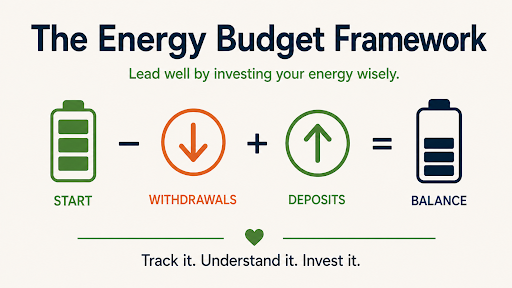
What If You Had an Energy Budget?
Most of us carefully budget our money, but how often do we stop to think about where our energy goes? For purpose-driven leaders, exhaustion often isn't caused by a lack of time—it's the result of investing energy without intention. The good news is that small shifts can make a significant difference. By becoming more aware of what energizes and drains you, you can lead more sustainably, make better decisions, and protect your wellbeing. In this week's blog, I share a simple framework for creating an "energy budget" and introduce a complimentary workbook to help you start managing your energy more intentionally.
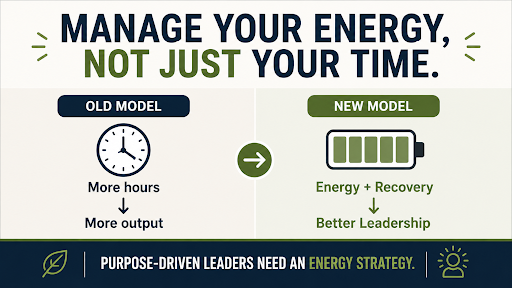
Why Purpose-Driven Leaders Need an Energy Strategy
Purpose-driven leaders often focus on managing their time, believing better productivity will solve overwhelm. But the real challenge may be managing energy instead. Every decision, meeting, interruption, and difficult conversation draws from a limited reserve, making it harder to bring your best thinking to the work that matters most.
Sustainable leadership isn't about pushing harder or working longer. It's about understanding your personal energy patterns, protecting your highest-energy hours, and intentionally building moments of recovery into each day.
When you learn to recharge as intentionally as you lead, you create the capacity to make a greater, lasting impact.
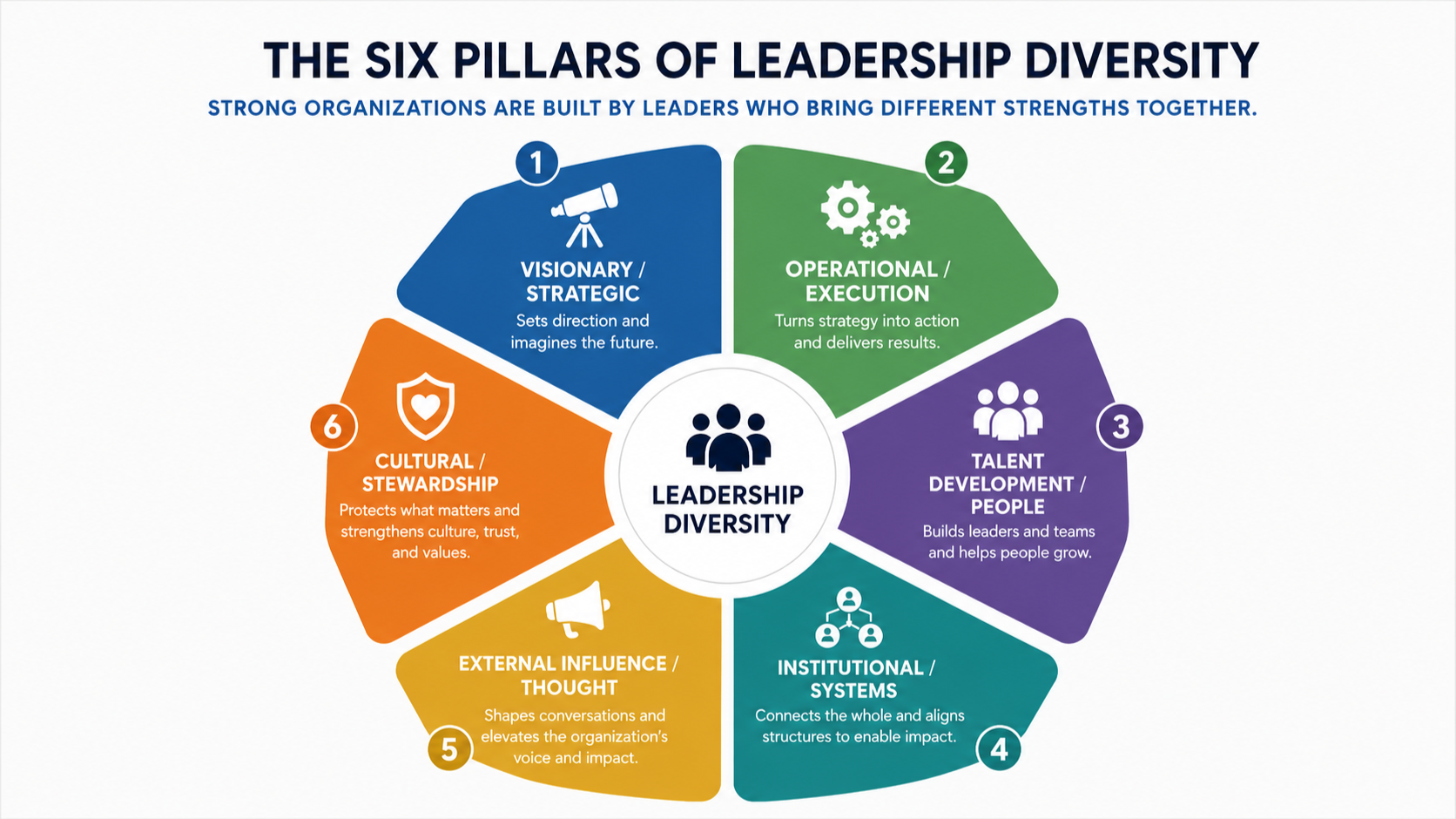
Leadership Diversity: Why Organizations Need More Than One Type of Leader
Many organizations unknowingly fall into the trap of valuing one leadership style above all others. Yet sustainable success rarely comes from a single type of leader. High performing organizations need visionaries who imagine the future, operational leaders who drive execution, people developers who grow talent, systems thinkers who connect the pieces, thought leaders who influence beyond the organization, and culture stewards who protect values and trust. This article explores the importance of leadership diversity and highlights six core leadership pillars that help organizations build stronger teams, foster resilience, strengthen collaboration, and create lasting impact in an increasingly complex world.

Stepping into Curiosity Before Feedback
Our brains are natural storytellers. They constantly create meaning from the situations, conversations, and challenges we experience at work and in life. But sometimes those stories limit us, damage relationships, and keep us stuck in assumptions that may not tell the full truth. This blog explores the difference between facts and the stories we attach to them, and why curiosity is one of the most powerful leadership tools we have. By slowing down, asking better questions, and staying open to understanding rather than judgment, we create space for empathy, clarity, stronger communication, and more thoughtful responses in both leadership and everyday interactions.

Decision Fatigue in Mission-Driven Roles: It’s Not the Volume — It’s the Weight
By the end of the day, it’s not just the number of decisions that exhausts you, but the weight of them. Mission-driven leaders rarely face simple choices. Decisions often carry implications for people, strategy, resources, reputation, and values.
Decision fatigue is not just about volume. It is about cognitive load. High-stakes, emotionally charged decisions place significant demands on the brain, and over time, even experienced leaders can fall into avoidance, over-analysis, or reactive patterns. The exhaustion you feel is not weakness. It reflects sustained mental effort. By understanding decision fatigue and creating structure around important choices, leaders can move from depleted reactions to more thoughtful, strategic decision-making.

A Culture of a Motivated and Engaged Workplace Is Built in the Small, Invisible Moments
We use the word culture often in organizations, yet most people know what culture feels like when they experience it. A healthy culture brings out people’s best work, while a stressful or stagnant culture drains energy and motivation.
At the heart of a thriving culture is employee engagement—the enthusiasm, commitment, and involvement people bring to their work. When engagement is high, employees are more productive, collaborative, and likely to stay. When it is low, performance and morale suffer. While today’s workforce has diverse expectations around purpose, flexibility, and growth, engagement is not built through grand initiatives. It grows through everyday conversations, recognition, care, and consistent leadership.

It’s time for managers to focus on well-being – not just burnout.
The past few years have reminded us that well-being is not a luxury—it is essential. Burnout, stress, and blurred boundaries between work and life have exposed how deeply our personal and professional well-being are connected. Yet many workplaces still treat them as separate.
True well-being goes beyond wellness programs or gym stipends. It encompasses career satisfaction, meaningful relationships, financial stability, physical health, and a sense of community. When organizations prioritize these elements, engagement, performance, and fulfillment rise together. Supporting the whole person is no longer optional—it is the foundation of a thriving, resilient, and sustainable workforce.

Want to be more compatible with your co-workers? Know their communications style.
Most workplace challenges come down to one thing: poor communication. Misunderstandings, missed deadlines, and strained relationships often stem from mismatched communication styles, not from a lack of effort. We are communicating more than ever, yet often connecting less.
Building communication compatibility begins with understanding how others prefer to interact. Instead of relying on your own style, ask yourself how your colleague receives information, makes decisions, and builds trust. When you adjust your approach to meet others where they are, collaboration strengthens. Communication is not about talking more—it is about listening better and aligning with intention.

How We are Failing the Nonprofit Workplace
After decades of managing and coaching within the nonprofit sector, one thing is clear: our traditional style of management is no longer working. The workforce has changed dramatically—more diverse, more intergenerational, and more remote—yet many leaders continue to rely on outdated management practices that fail to engage staff.
Today, only a small fraction of employees are truly engaged in their work. Engagement is not about perks or performance reviews. It is about helping people do meaningful, fulfilling work that uses their strengths. When nonprofits invest in engagement, they unlock human potential—and with it, far greater impact on the causes that matter most.

What sets great managers apart?
The best managers know that great leadership is not about fixing weaknesses but about amplifying strengths. Every person brings unique talents to the table, and when those strengths are recognized and intentionally applied, performance, accountability, and innovation thrive.
Strengths-based management begins with curiosity. Ask your team what energizes them, when they feel most effective, and how they learn best. Align their natural talents with meaningful work, and you’ll unlock both confidence and results. When individuals are encouraged to do more of what they do best, teams become stronger, trust deepens, and everyone’s impact grows.