

Start your journey to personal sustainability, discover well-being strategies, and achieve balance and happiness now!
Blog
What do you want to explore today?


You Believe in Your Work. But Is It Supporting Your Well-Being?
Believing in your organization’s mission can make work meaningful, but it does not automatically make each working day fulfilling. Gallup research suggests that enjoyment, a sense of contribution, and meaningful choice are closely connected to overall well-being. This article invites mission-driven professionals to examine how their work feels in practice: which tasks energize them, whether they can see the impact of their contribution, and where they have a say in how work gets done. By reflecting on an ordinary week and identifying one realistic change, professionals can begin creating a healthier, more sustainable relationship with work they deeply care about.

Emotional Intelligence Doesn’t Mean Keeping Everyone Happy
Emotional intelligence doesn’t mean keeping everyone happy or avoiding uncomfortable conversations. For leaders, it means understanding emotions—both your own and others’—while still addressing what needs to be addressed. Empathy can help you understand someone’s reaction, but it doesn’t require you to remove their discomfort, change a sound decision, or avoid accountability. Emotionally intelligent leadership also involves self-awareness, self-management, adaptability, conflict management, and clear communication. By learning to manage your own reactions and respond with both care and clarity, you can navigate difficult conversations while protecting trust, strengthening relationships, and keeping the work moving forward.
When Work Shakes Your Confidence: How to Rebuild It
A difficult experience at work can do more than leave you disappointed—it can make you question your ability to lead, decide, and handle challenges. But one setback does not define your overall capability. This article explores how negative feedback, mistakes, overwhelm, or difficult outcomes can affect confidence and cause even accomplished professionals to play smaller. Learn how to separate what happened from what you have made it mean, rebuild your evidence of competence, seek perspective from trusted people, and create opportunities for small wins. Confidence does not always come before action; often, it returns because you take the next step.

Culture Is Built in the Small, Invisible Moments—and Every One of Us Helps Create It
Workplace culture isn’t built only through retreats, values statements, benefits, or big initiatives. It’s shaped every day through the small, often invisible moments between people. A colleague who listens, a manager who notices, someone who gives credit, asks for your opinion, or checks in after a difficult meeting. These interactions may seem insignificant on their own, but collectively they tell us whether we matter, belong, and feel safe at work. And culture isn’t something only leaders create. Every one of us contributes to it through the way we notice, include, listen, acknowledge, connect with, and care for the people around us.

Why High Achievers Need to Get Better at “Good Enough”
High achievers often believe their high standards are the reason for their success. But striving for excellence is not the same as chasing perfection. Learning to recognize when work is good enough can reduce stress, protect your energy, and help you focus on what matters most. This article explores the difference between healthy ambition and perfectionistic concern, the hidden cost of endless polishing, and the value of deciding what a task truly requires before you begin. Discover how to preserve excellent standards while creating clearer finish lines and making more intentional choices about where your time and effort belong the most.

Burnout Isn't Just About Working Too Much. It's About How You Recover
Burnout isn't always caused by working too much. Sometimes it's about how we respond when stress begins to take its toll. As purpose-driven leaders, we naturally lean into our greatest strengths when we're overwhelmed. Executors work harder. Relationship builders care for others. Influencers seek renewed purpose. Strategic thinkers analyze every possibility. Those instincts aren't wrong, but they aren't always the fastest path to recovery. Research suggests that balancing our natural strengths with a different, less instinctive response can restore energy more effectively. The key isn't abandoning who you are. It's learning when a different approach can help you recover and lead sustainably.
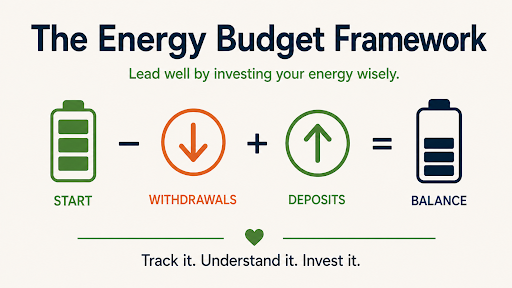
What If You Had an Energy Budget?
Most of us carefully budget our money, but how often do we stop to think about where our energy goes? For purpose-driven leaders, exhaustion often isn't caused by a lack of time—it's the result of investing energy without intention. The good news is that small shifts can make a significant difference. By becoming more aware of what energizes and drains you, you can lead more sustainably, make better decisions, and protect your wellbeing. In this week's blog, I share a simple framework for creating an "energy budget" and introduce a complimentary workbook to help you start managing your energy more intentionally.
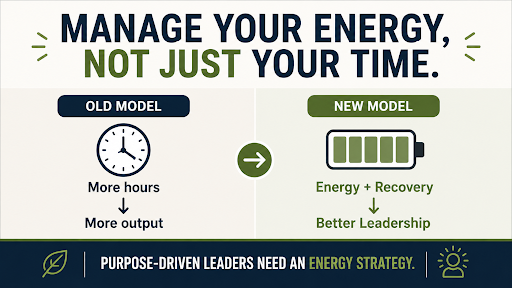
Why Purpose-Driven Leaders Need an Energy Strategy
Purpose-driven leaders often focus on managing their time, believing better productivity will solve overwhelm. But the real challenge may be managing energy instead. Every decision, meeting, interruption, and difficult conversation draws from a limited reserve, making it harder to bring your best thinking to the work that matters most.
Sustainable leadership isn't about pushing harder or working longer. It's about understanding your personal energy patterns, protecting your highest-energy hours, and intentionally building moments of recovery into each day.
When you learn to recharge as intentionally as you lead, you create the capacity to make a greater, lasting impact.
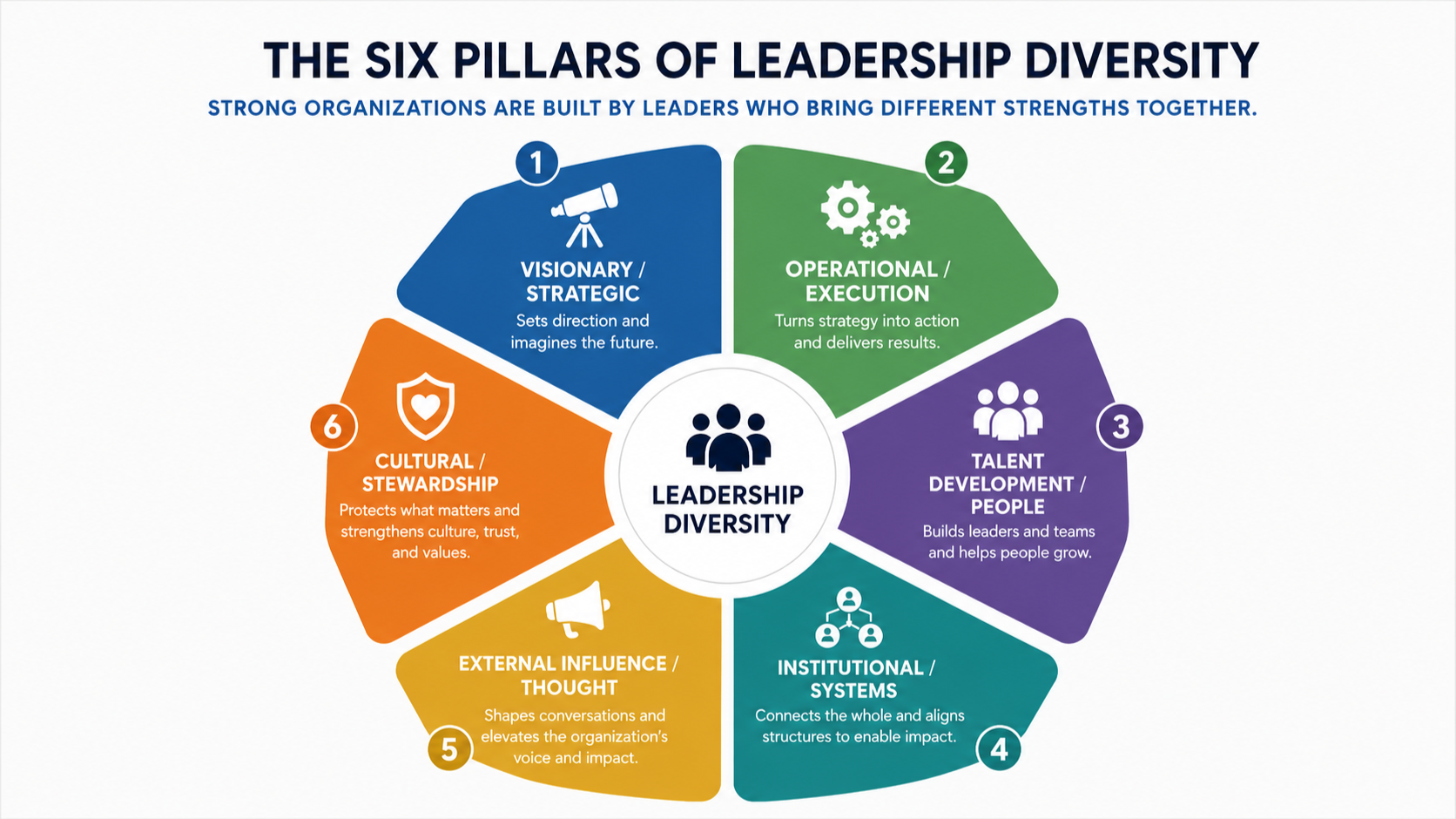
Leadership Diversity: Why Organizations Need More Than One Type of Leader
Many organizations unknowingly fall into the trap of valuing one leadership style above all others. Yet sustainable success rarely comes from a single type of leader. High performing organizations need visionaries who imagine the future, operational leaders who drive execution, people developers who grow talent, systems thinkers who connect the pieces, thought leaders who influence beyond the organization, and culture stewards who protect values and trust. This article explores the importance of leadership diversity and highlights six core leadership pillars that help organizations build stronger teams, foster resilience, strengthen collaboration, and create lasting impact in an increasingly complex world.

Stop Chasing Passion. Start Building a Career Around Your Strengths.
Many professionals spend years chasing passion, believing it’s the key to career fulfillment. But passion alone isn’t always enough. True satisfaction comes from understanding and using your natural strengths every day. In this article, I share how discovering my CliftonStrengths transformed the way I think about work, success, and personal growth. Learn why strengths matter more than weaknesses, how they impact engagement and well-being, and why so many capable professionals still feel stuck or drained. Most importantly, discover practical ways to build a strengths-based career that feels more energizing, sustainable, and aligned with who you naturally are.

Stepping into Curiosity Before Feedback
Our brains are natural storytellers. They constantly create meaning from the situations, conversations, and challenges we experience at work and in life. But sometimes those stories limit us, damage relationships, and keep us stuck in assumptions that may not tell the full truth. This blog explores the difference between facts and the stories we attach to them, and why curiosity is one of the most powerful leadership tools we have. By slowing down, asking better questions, and staying open to understanding rather than judgment, we create space for empathy, clarity, stronger communication, and more thoughtful responses in both leadership and everyday interactions.

Why It’s So Hard to Shake Difficult Emotions at Work
t rarely takes much for a moment at work to shift your entire state. An email lands the wrong way, a comment catches you off guard, or a conversation doesn’t go as expected. Suddenly, what seemed small feels much bigger.
The emotion itself is not the problem. Frustration, disappointment, and self-doubt are often signals that something matters. What keeps us stuck is what happens next. We replay the moment, reinterpret it, and build a story around it. Before long, we are reacting to our assumptions rather than the facts. The key is not avoiding difficult emotions, but creating enough space to respond with clarity instead of reacting on autopilot.

Why Smart Teams Still Get It Wrong: How fast thinking, hidden biases, and overconfidence quietly derail good decisions-and why pausing matters
Most of us like to believe we’re thoughtful decision-makers, yet much of what drives our behaviour happens on autopilot. Research suggests that up to 40–50% of our daily actions are habitual, including how we think, respond, and lead.
In fast-paced environments, we often rely on familiarity, assumptions, and quick judgments. While these patterns are efficient, they are not always effective. Drawing on Daniel Kahneman’s work, this article explores the difference between fast, automatic thinking and slower, more deliberate thinking. The challenge is not that we think too slowly, but that we rarely pause. Without that pause, important decisions can suffer.

When Everything Feels Urgent at Work — 3 Shifts to Lead More Intentionally
Many leaders begin the week with good intentions, yet their days quickly disappear into emails, meetings, messages, and urgent requests. Over time, this creates a pattern of reactive leadership, where responding takes priority over thinking, planning, and moving important work forward.
Research shows that interruptions are among the most common workplace stressors, and it can take significant time to regain focus after being distracted. These repeated disruptions fragment attention and reduce meaningful progress. When everything feels urgent, leaders stop leading their work and start chasing it. Effective leadership requires managing attention, protecting focus, and intentionally prioritising the work that matters most.

Decision Fatigue in Mission-Driven Roles: It’s Not the Volume — It’s the Weight
By the end of the day, it’s not just the number of decisions that exhausts you, but the weight of them. Mission-driven leaders rarely face simple choices. Decisions often carry implications for people, strategy, resources, reputation, and values.
Decision fatigue is not just about volume. It is about cognitive load. High-stakes, emotionally charged decisions place significant demands on the brain, and over time, even experienced leaders can fall into avoidance, over-analysis, or reactive patterns. The exhaustion you feel is not weakness. It reflects sustained mental effort. By understanding decision fatigue and creating structure around important choices, leaders can move from depleted reactions to more thoughtful, strategic decision-making.

The Tensions Your Team Feels—but Doesn’t Talk About
Teams rarely fall apart because of dramatic conflict. More often, they erode quietly. Work gets done and meetings continue, but beneath the surface, conversations become guarded and energy shifts from collaboration to self-protection.
In my work with leaders, I’m often called in not because teams are fighting, but because something feels “off.” What they are sensing is usually unspoken tension. The problem is not the tension itself, but avoiding it. When issues remain unspoken, people disengage, hesitate to commit, or begin to withdraw. Strong leadership means addressing tension early, creating clarity, and building trust through open, honest conversations.

A Culture of a Motivated and Engaged Workplace Is Built in the Small, Invisible Moments
We use the word culture often in organizations, yet most people know what culture feels like when they experience it. A healthy culture brings out people’s best work, while a stressful or stagnant culture drains energy and motivation.
At the heart of a thriving culture is employee engagement—the enthusiasm, commitment, and involvement people bring to their work. When engagement is high, employees are more productive, collaborative, and likely to stay. When it is low, performance and morale suffer. While today’s workforce has diverse expectations around purpose, flexibility, and growth, engagement is not built through grand initiatives. It grows through everyday conversations, recognition, care, and consistent leadership.

Confronting Imposter Syndrome and Building Confidence
Confidence isn’t something you wait for—it’s something you build. Many people find themselves standing at the edge of a new opportunity, held back by overthinking, perfectionism, procrastination, or imposter syndrome.
The truth is that confidence is not a prerequisite for growth. It is the result of taking action. Growth is often uncomfortable, but each small step outside your comfort zone becomes evidence that you can trust yourself. That is why I encourage clients to focus on micro-steps—the small, manageable actions that create momentum without feeling overwhelming. You do not need fearlessness. You simply need the courage to take the next step.

What Fear of Failure Teaches Us About Leadership
Even the most capable leaders often carry a quiet fear of failure. They worry about making the wrong decision, disappointing others, or jeopardising a mission they care deeply about. This fear rarely appears as fear. Instead, it shows up as perfectionism, over-control, risk aversion, or relentless overwork.
The truth is that failure is not a verdict—it is feedback. Every setback provides valuable information that supports learning, growth, and better decision-making. When leaders view failure as part of progress, they stop allowing fear to drive their choices and begin modelling courage. In doing so, they create space for innovation, trust, and authentic leadership.

Burnout: Myths, Misunderstandings, and a Better Way Forward
Burnout is often misunderstood as simply being stressed or tired, but it runs much deeper. It occurs when workplace stress goes unmanaged for too long, leading to exhaustion, cynicism, and a loss of meaning in work.
Burnout is not just a personal issue. Research shows it is often driven by organisational factors such as excessive workload, lack of control, poor recognition, weak workplace relationships, unfair treatment, and misaligned values. Time off alone cannot solve it. Lasting change happens when organizations address the root causes and create environments where people can thrive.